The €19 flight to Barcelona looks great — until you add the €18 bus to the airport, the €40 checked bag, the 90-minute security queue and the 40-minute metro on the other end. We ran the real numbers on Europe's most popular city pairs. The results might surprise you.
The hidden costs airlines don't advertise
Low-cost carriers built a business around one number: the base fare. Everything else — luggage, seat selection, airport transfers, a bottle of water — is billed separately and often at outrageous margins. Before comparing train vs flight on price, you need the actual out-of-pocket cost, not the headline fare.
A typical low-cost flight in Europe adds up as follows: base fare + airport transfer (€10–25 each way, remote airports) + checked bag (€20–50 each way) + seat reservation (€5–15) + airport food (€10–20). That €29 ticket frequently lands at €100–130 total before you've left the ground.
The hidden cost of time
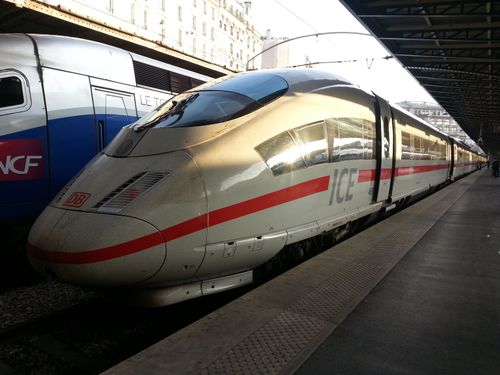
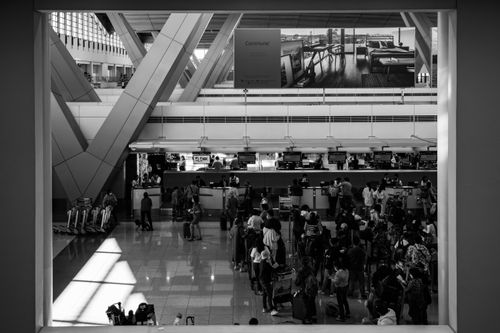
Time is the metric airlines hide most effectively. A "2h flight" from Paris to Barcelona is actually a 5+ hour commitment: 90 min early at CDG, 45 min transit to the city center at El Prat, and the flight itself. The direct high-speed train does the same city-center to city-center journey in 6h 30m — with no security, no baggage carousel, and a comfortable seat the whole way.
The train wins on time for any European route under roughly 4–5 hours of rail journey. Above that, flying starts to win — but the cost comparison rarely does.
Route-by-route comparison
All figures are typical totals including transfers, 1 checked bag and average advance fares. Train prices via Trainline.
| Route | Flight (total) | Train (total) | Rail time | Winner |
|---|---|---|---|---|
| Madrid → Barcelona | €80–130 | €14–45 | 2h 30m | Train |
| Paris → London | €120–200 | €39–90 | 2h 15m | Train |
| Paris → Amsterdam | €100–180 | €29–80 | 3h 20m | Train |
| Rome → Florence | €90–150 | €9–35 | 1h 30m | Train |
| Paris → Barcelona | €80–150 | €19–70 | 6h 30m | Train (cost) |
| London → Edinburgh | €90–160 | €39–80 | 4h 30m | Train |
| Munich → Venice | €100–170 | €29–80 | 7h 00m | Tie (time vs cost) |
The carbon gap nobody talks about
A return flight Paris–Barcelona emits roughly 340 kg of CO2 per passenger (including radiative forcing at altitude). The same journey by high-speed TGV emits approximately 4–6 kg. That's not a rounding error — it's a factor of 60–80x.
Eurostar puts it more bluntly: taking the train instead of flying London–Paris saves the equivalent of 96% of the flight's carbon footprint. Airlines have started selling carbon offsets to neutralize this, but independent research consistently shows offsets rarely deliver what they promise.
Where flying still wins
This isn't propaganda — there are routes where flying is the only sensible option:
- Island destinations — Canary Islands, Greek islands, Sardinia. No rail alternative exists.
- Very long distances — London to Athens, Lisbon to Warsaw. A 20+ hour train journey is a different product, not a commute substitute.
- When you genuinely need speed — if you have 3 hours and the train takes 8, fly. No argument.
- Certain Scandinavian routes — Norway's rail network is spectacular but limited; some fjord routes are only accessible by plane or boat.
The booking trap that catches most people
Most travelers compare the airline's cheapest headline fare against the train's standard fare bought the same day. That's the worst possible comparison. Book both early and the gap widens even further in the train's favor — saver fares on routes like Madrid–Barcelona or Paris–London start as low as €14–29 booked weeks ahead, while budget airline advance fares often include surprise fees that inflate the total by 50–80%.
The honest move: search both on the same day, same advance period, and add transfers and luggage to the flight total before deciding.
Frequently asked questions
Ready to ditch the airport?
Search train times and fares for your route — every operator, every departure, one search.
Plan with AI →