Japan has one of the best rail networks in the world, and for a first trip it is also the easiest way to get around. This guide explains the trains you will actually meet, how long the main journeys take, and how to plan a route without wasting days in stations.
The trains you need to know
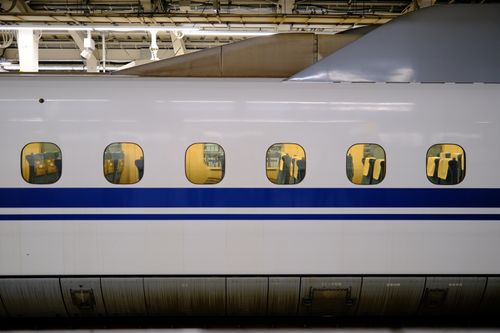
The Shinkansen is the high-speed network that connects the big cities. On the main line between Tokyo and Osaka there are three types of train, and the difference matters:
- Nozomi: the fastest, with the fewest stops. It is the one most travellers take.
- Hikari: slightly slower, with a few more stops.
- Kodama: stops at every station. Useful only for small towns along the line.
Away from the Shinkansen, limited express trains cover the regional lines. Two worth knowing: the Narita Express from the airport to central Tokyo, and the Hida from Nagoya to Takayama in the Japanese Alps.
How long the main journeys take
These are the shortest journey times we found for each route, on the fastest direct train:
- Tokyo – Kyoto: 2h07
- Tokyo – Osaka: 2h21
- Osaka – Kyoto: 13 minutes (from Shin-Osaka)
- Osaka – Hiroshima: 1h20
- Kyoto – Hiroshima: 1h36
- Tokyo – Hiroshima: 3h47
- Tokyo – Fukuoka: 4h52
- Tokyo – Kanazawa: 2h24
- Tokyo – Sendai: 1h30
- Narita Airport – Tokyo Station: 53 minutes
Times change with the day and the train, so check the live schedule for your date when you book.
The Japan Rail Pass: do the sums first
The pass covers most Shinkansen, such as the Hikari, the Kodama and the Sakura, but not the Nozomi or the Mizuho, the fastest services. The price of the pass has changed in recent years, so do not assume it pays for itself: add up the individual tickets on your own route and compare. On a trip that stays between Tokyo, Kyoto and Osaka, single tickets are often the better deal.
Reserved seats, luggage and the Fuji seat
- Reserved seats are the safe choice in busy periods such as Golden Week, the summer holidays and the cherry blossom season.
- Suitcases with a total size between 160 and 250 cm need a reserved seat with oversized baggage space.
- Going from Tokyo to Kyoto or Osaka, a window seat on the right-hand side (seat E) gives you a chance to see Mount Fuji, weather permitting.
- In Osaka, the Shinkansen stops at Shin-Osaka, not at Osaka Station. One stop on the JR Kyoto Line connects the two.
A 10-day route by train
- Days 1 to 4: Tokyo. Arrive by the Narita Express (53 minutes to Tokyo Station).
- Days 5 to 7: Kyoto, 2h07 from Tokyo on the Nozomi.
- Day 8: Osaka, only 13 minutes from Kyoto by Shinkansen.
- Day 9: Hiroshima and Miyajima, 1h20 from Osaka.
- Day 10: back to Tokyo, 3h47 by Shinkansen.
Where to start
Pick your two or three main cities, check the real journey time between them and book the long legs first. With WoW Train you can look up the time and the train type for almost 200 pairs of Japanese cities in a few seconds.
Your train. Your world.
Choose Japan and look up any pair of cities: real duration, train type and booking.
Try Japan mode →