Night trains in Europe are having their biggest revival in a decade. New routes, new operators and refurbished rolling stock mean that in 2026, going to sleep in Vienna and waking up in Brussels is not just possible — it's comfortable, competitive on price, and far more enjoyable than an early flight.
Updated September 2026: two new routes just changed the map — European Sleeper's Paris–Berlin service (launched March 2026) and the new Brussels–Milan overnight (launching this month). Demand for sleeper berths is currently outstripping supply across the network, so book earlier than you think you need to.

The Main Night Train Operators in Europe
ÖBB Nightjet
The Austrian national rail operator ÖBB runs the most extensive night train network in Europe under the Nightjet brand. In 2026 they operate more than 20 routes connecting Austria, Germany, Switzerland, France, Italy, Belgium, the Netherlands and beyond. Nightjet is the backbone of the European sleeper revival and the operator to check first for any long-distance overnight journey.
Key Nightjet routes in 2026: Vienna–Brussels, Vienna–Paris, Vienna–Venice, Amsterdam–Vienna, Berlin–Rome, Zurich–Hamburg, Munich–Paris. The fleet has been substantially renewed — newer cars have private en-suite compartments with shower.
European Sleeper
The European Sleeper is a private operator founded in 2023, running overnight services between Brussels, Amsterdam, Berlin and Prague. It positions itself as a premium, sustainability-focused alternative to flying the central European corridor. The cabins are modern, the service is personal, and it's one of the most talked-about train launches in Europe in recent years.
In March 2026 the operator added a direct Paris–Berlin sleeper, running three times a week via Brussels — the first new overnight link between the two capitals in years. A Brussels–Milan route is launching this month (September 2026), extending the network south into Italy for the first time.
SNCF Intercités de Nuit
France's national operator runs overnight trains on domestic routes — primarily Paris–Nice, Paris–Briançon and Paris–Hendaye. Also cross-border to Barcelona. Comfortable, affordable, and the most practical option for travelling across France overnight.
Trenitalia Intercity Notte
Italy's domestic night trains connect Rome and Milan with Sicily (via ferry), Reggio Calabria, and Trieste. Useful if you're heading deep into southern Italy or want to do the Sicily crossing as a rail journey.
The Best Night Train Routes in Europe 2026
| Route | Operator | Journey Time | From (seat) | From (sleeper) |
|---|---|---|---|---|
| Vienna → Paris | Nightjet | ~14h | €49 | €99 |
| Vienna → Brussels | Nightjet | ~14h | €39 | €89 |
| Amsterdam → Berlin → Prague | European Sleeper | ~12h | €49 | €109 |
| Paris → Berlin | European Sleeper | ~13h | €49 | €99 |
| Brussels → Milan | European Sleeper | ~13h | €49 | €109 |
| Berlin → Rome | Nightjet | ~18h | €49 | €119 |
| Vienna → Venice | Nightjet | ~9h | €29 | €79 |
| Paris → Nice | SNCF Intercités | ~7h | €19 | €59 |
| Zurich → Hamburg | Nightjet | ~11h | €39 | €89 |
| Munich → Paris | Nightjet | ~14h | €49 | €99 |
Prices are approximate starting fares for advance booking. Book via Klook to compare all operators and cabin types.
Cabin Types: What to Choose
Reclining seat in an open carriage. The budget option — fine for journeys under 8 hours if you can sleep sitting up. Not ideal for longer routes.
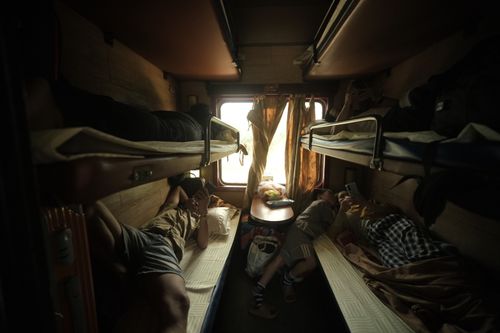
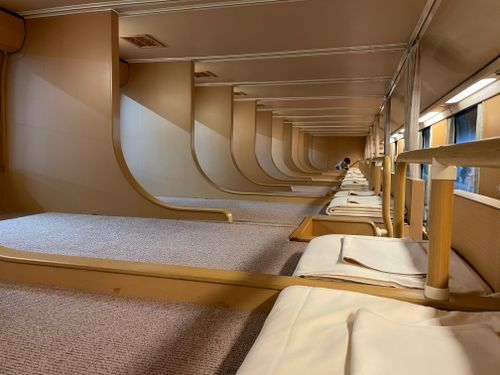
Shared cabin with 4 or 6 fold-down bunk berths. Pillow and blanket included. You share the cabin with other passengers (same gender booking available on request). The classic budget overnight option — comfortable enough for a good night's sleep. Lockers for bags.
Private 1, 2 or 3-berth compartment with proper beds, linen, towels, and breakfast included. Newer Nightjet cars have en-suite shower compartments. The best way to travel long distance overnight — you arrive genuinely rested.
Solo travellers: book a couchette in a 4-berth cabin — more privacy than a 6-berth. Women travelling alone can request a female-only couchette cabin on most Nightjet services.
Tips for Booking European Sleeper Trains in 2026
- Book 8–12 weeks ahead for summer travel. Sleeper berths and couchette cabins on popular routes (Vienna–Paris, Amsterdam–Berlin) sell out fast between June and September.
- Compare cabin classes carefully. Sometimes the difference between a couchette and a private sleeper is €40–60 per person — worth it on a 14-hour journey, less so on a 7-hour one.
- Check meal options. Nightjet includes breakfast in sleeper compartments. European Sleeper has a bar car with dinner and drinks. SNCF Intercités night trains do not — bring your own food.
- Arrive early. Night trains load 20–30 minutes before departure and the platform fills up. If you have a cabin, the conductor will direct you to your berth once on board.
- Take earplugs and an eye mask. Even in a private sleeper, station stops and track noise are audible. Quality sleep gear makes a significant difference.
- Keep valuables on your body. Couchette cabins have a communal feel — use the provided locker for your bag, but keep passport and phone on you or under your pillow.
- Don't miss the sunrise. Set an alarm 45 minutes before arrival — the approach into cities like Venice, Paris and Prague at dawn is one of the great travel experiences in Europe.
Night Train vs. Flight: Is It Worth It?
For journeys over 600 km where an overnight train exists, the comparison looks better than most travellers expect:
- Cost: A couchette berth at €59 + savings on one night's hotel (€60–€120) often makes the sleeper cheaper than a budget flight plus accommodation.
- Time: A 14-hour overnight train departs at 21:00 and arrives at 07:00 — no hotel checkout, no airport taxi at 4am, no check-in queue.
- Carbon footprint: A train emits 6–10x less CO2 per passenger-km than a short-haul flight. Night trains are consistently cited as one of the lowest-carbon long-distance travel options available.
- Comfort: No middle seat, no bag-drop stress, no security theatre. A private sleeper on Nightjet is genuinely more comfortable than most budget airline seats.
- City-centre to city-centre: Train stations are in the heart of every European city; airports are not. Add 2–3 hours for the airport experience on both ends of a flight.
Plan a trip with a night train leg
Tell our AI where you want to go and it will build you a complete Europe itinerary — including the best night trains along the route — with Klook booking links for every leg.
Plan with AI →Frequently asked questions
What is the European Sleeper train?
The European Sleeper is a private night train operator launched in 2023 that runs overnight services between Brussels, Amsterdam, Berlin and Prague. It is separate from ÖBB Nightjet and SNCF Intercités de Nuit, and targets travellers who want a premium overnight rail experience as an alternative to flying.
Which night train routes exist in Europe in 2026?
Key night train routes in 2026 include: Vienna–Brussels (Nightjet), Vienna–Paris (Nightjet), Vienna–Venice (Nightjet), Amsterdam–Vienna (Nightjet), Berlin–Rome (Nightjet), Paris–Nice (SNCF Intercités de Nuit), Amsterdam–Berlin–Prague (European Sleeper), Paris–Berlin (European Sleeper, launched March 2026), Brussels–Milan (launching September 2026), and Barcelona–Paris (SNCF). Demand is currently outstripping supply on several routes — book early.
How much does a sleeper train in Europe cost?
Night train prices vary by cabin class. Seat reservations start from €19–29 on Nightjet. Couchettes (shared bunk cabin, 4 or 6 berths) cost €39–79. Private sleeper compartments (1-2 berths, linen and breakfast included) range from €79–179 per person. Book early — the cheapest berths sell out fast in summer.
How do I book a sleeper train in Europe?
Use Klook to search, compare and book night train tickets across all European operators in one place. You can filter by cabin type (seat, couchette, sleeper), compare prices, and book your preferred berth. Booking 8–12 weeks ahead gets the cheapest fares for summer travel.